
Economic Calendar

Tuesday, September 20, 2011

‘Buffett Rule’ for Millionaire Tax Seen as Easier Said Than Done

By Richard Rubin - Sep 20, 2011 11:00 AM GMT+0700

Enlarge image Obama `Millionaire Tax' Is Seen Easier Said Than Done

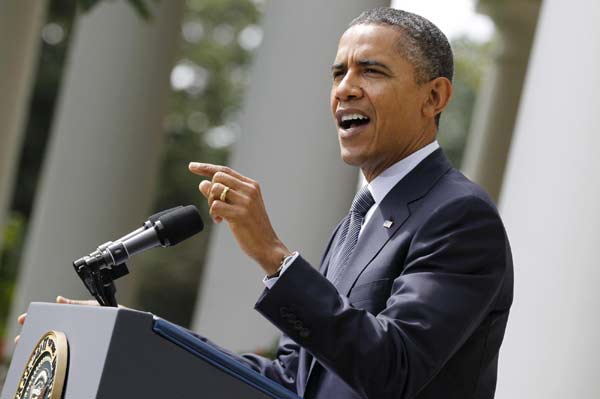
President Obama called for $1.5 trillion in tax increases over the next decade to help trim the deficit, saying U.S. prosperity depends on paying down the federal debt. Photographer: Joshua Roberts/Bloomberg


Turning the “Buffett rule” proposed yesterday by President Barack Obama from a political concept into real-world tax policy aimed at the highest-earning U.S. households will prove logistically and mathematically difficult.

The concept, named for billionaire investor Warren Buffett, would require Americans earning more than $1 million a year to pay at least the same tax rate as middle-class households. Constructing such a rule would be tricky because high earners aren’t the only taxpayers benefiting from breaks; many middle- income families use deductions, credits and exemptions to drive their rates below the 17.4 percent that Buffett says he pays.

For now, the Buffett rule is less of a concrete legislative proposal and more of a political talking point that has elicited Republican cries of “class warfare.” Democrats defended the idea and urged Congress to adopt it in designing a new tax system.

“We’re not going to give the Congress a detailed proposal for how to meet that principle because we think there are a bunch of different ways to do that,” said Treasury Secretary Timothy Geithner, adding that the details of the rule would depend on the rest of the structure of a revamped tax code.

Charles Schumer of New York, the third-ranking Democrat in the Senate, said on a conference call with reporters yesterday that the proposal would have broad support in his party and would be a “game-changer” in the tax debate.

‘Defining Principle’

“It really works well as a defining principle, but I think it works even better as an actual piece of legislation,” said Schumer, a member of the tax-writing Finance Committee. “Let’s draft the language and get it scored. Let’s put it on the floor and let’s have a vote.”

It’s undetermined how much money the proposal would raise if applied to the current tax code or how many people would be affected. Senate Majority Leader Harry Reid, a Nevada Democrat, said in a floor speech yesterday that 22,000 Americans have incomes exceeding $1 million and pay less than 15 percent of their income in taxes.

“Middle-class families shouldn’t pay higher taxes than millionaires and billionaires,” Obama said at the White House yesterday. “Warren Buffett’s secretary shouldn’t pay a higher tax rate than Warren Buffett. There is no justification for it.”

The example that Obama gave during his speech illustrated the difficulty of applying the Buffett principle in practice. He said that a teacher earning $50,000 shouldn’t pay a higher tax rate than an investor making $50 million.

Deductions and Exemptions

Obama’s example isn’t as straightforward as it appears. Under current law, that teacher would have a maximum taxable income of $40,500, after subtracting the standard deduction and personal exemption. The teacher’s federal income tax would be $6,250, or 12.5 percent of the $50,000 income.

The teacher’s tax rate, though, would be higher if payroll taxes were included. This year, employees at that income level pay 6.65 percent of their wages, and employers pay 8.65 percent.

The middle-income tax rate would be lower if the teacher took advantage of the specific breaks available to middle-income taxpayers: those for retirement savings contributions and health-care flexible spending arrangements, and deductions for student loan interest and out-of-pocket expenses of educators.

The tax rate would be even lower if the teacher were married or had children, which would allow for a larger standard deduction, personal exemptions and a child tax credit. A married couple with two children can earn as much as $45,776 without paying income taxes this year, according to the Tax Policy Center, a nonpartisan Washington research group.

Complicated Arithmetic

As a result of those complexities, lawmakers trying to write a Buffett rule would have to make some choices about how to define a middle-income family’s earnings and tax rate.

They also face complicated arithmetic for higher-income taxpayers. Assuming the millionaire investor received all of his or her income from long-term capital gains and dividends, the tax rate would be 15 percent, the preferential rate for investment income.

That rate could be much lower if the investor took itemized deductions for state and local taxes, mortgage interest and charitable contributions. It would be higher if the investor also had some wage income, which would be subject to a 35 percent top rate and at least some payroll taxes.

Writing a Buffett rule into law would require defining income and setting a minimum rate for it, said Roberton Williams, a senior fellow affiliated with the Tax Policy Center.

“Every time you set up something like this, you’re opening the door for the tax lawyers to come in and get around the attempt to raise revenues,” Williams said.

Buffett’s Tax Bill

Buffett, the 81-year-old chairman and chief executive officer of Berkshire Hathaway Inc., said his federal tax bill last year, or the income tax he paid and payroll taxes paid by him and on his behalf, was $6.93 million.

“That sounds like a lot of money,” Buffett wrote in an essay calling for higher taxes on millionaires in The New York Times last month. “But what I paid was only 17.4 percent of my taxable income -- and that’s actually a lower percentage than was paid by any of the other 20 people in our office.”

Several bipartisan groups, including the fiscal commission appointed by Obama last year, have proposed eliminating the preferential tax rates for capital gains as part of a tax overhaul that also would lower rates on wage income.

That approach, rather than the calculation of a minimum tax, might be the most straightforward way to satisfy the Buffett principle, Williams said.

Preferential Rate

Alan Viard, a resident scholar at the American Enterprise Institute, a Washington group that favors smaller government, disputed the idea that most millionaires pay lower tax rates than the middle class.

“One reason you have a preferential rate today for investments is because they’re already taxed at the corporate level,” he said. “You have to consider both levels of tax.”

The Buffett rule would essentially operate as a type of alternative minimum tax.

The current AMT came into its current form in the 1986 tax- code overhaul. It requires taxpayers to compare their tax liability under the regular tax code with their liability under the AMT. Because the AMT doesn’t allow taxpayers the full benefits of the state and local tax deduction or personal exemptions, people who have large families or who live in high- tax states tend to be disproportionately affected.

Non-Payers

Congressional efforts to prevent people from legally avoiding all taxes haven’t been successful. In 2008, the most recent year for which data is available, 18,783 people filed U.S. tax returns with adjusted gross incomes of at least $200,000 and owed no taxes. That represented 0.43 percent of high-income taxpayers, the biggest non-payer percentage in an Internal Revenue Service study that dates to 1977.

Lawmakers could satisfy the Buffett rule by disallowing the lower rates under the existing AMT, with a top rate of 28 percent, said Jeff Hamond, a former Schumer tax aide who is now a vice president at Van Scoyoc Associates, a Washington lobbying firm.

“That wouldn’t be simple,” he said. “But it could be a placeholder until comprehensive tax reform passes, and the richest Americans would definitely pay a higher effective rate than the middle class.”

To contact the reporter on this story: Richard Rubin in Washington at rrubin12@bloomberg.net

To contact the editor responsible for this story: Mark Silva at msilva34@bloomberg.net


Read more...

Corporate Jets Face Flight Fee in Obama Plan

Enlarge image Corporate Jets Face $100-a-Flight Fee in Obama Deficit Plan

The interior of a Raytheon Hawker 800, used by Blue Star Jets, is seen at Teeterboro airport in New Jersey on Aug. 10, 2011. Photographer: Scott Eells/Bloomberg


President Barack Obama’s administration proposed a $100 per-flight fee on corporate jets and other turbine-powered planes that use the U.S. air-traffic system.

The fee would raise an estimated $11 billion over 10 years, according to the president’s recommendations to the 12-member congressional committee charged with finding ways to trim the deficit. The fee is aimed at private aircraft, which currently don’t pay their fair share of costs of operating the aviation system, the administration said today.

About two-thirds of the air-traffic system is paid for by aviation excise taxes, including levies on airline tickets and on fuel. Last year these taxes raised $10.8 billion, according to the Department of Transportation.

There is a disparity between what airlines and their passengers pay into the system and what users of private aircraft pay, the plan said.

An airline flight from Los Angeles to San Francisco would generate $1,300 to $2,000 in taxes, depending on the number of passengers and what they paid for tickets. A private jet, which requires almost the same services from air-traffic controllers, would pay about $60 in fuel taxes, the plan said.

“General aviation users currently pay a fuel tax, but this revenue does not cover their fair-share use of air traffic services,” the plan said.

Opposition Mounts

A coalition of nine U.S. associations representing users and manufacturers of corporate and private aircraft issued a joint statement “expressing our unified opposition” to the proposal.

“Mr. President, many foreign countries have imposed per flight charges on general aviation and the results have been devastating,” the e-mail statement said. “Please do not go down the dangerous path and cost jobs in our community.”

General-aviation pilots pay their fair share of fuel taxes and a new fee would create “a costly new federal collection bureaucracy,” the groups said.

The groups that issued the letter include the Washington- based General Aviation Manufacturers Association, whose members include General Dynamics Corp. (GD)’s Gulfstream and Textron Inc. (TXT)’s Cessna; the Washington-based National Business Aviation Association, with members including PepsiCo Inc. and Humana Inc. (HUM), the Aircraft Owners and Pilots Association, based in Frederick, Maryland, which has more than 400,000 individual members; and the Experimental Aircraft Association in Oshkosh, Wisconsin.

NetJets Reacts

Berkshire Hathaway Inc. (BRK/A)’s NetJets, the largest U.S. firm selling fractional shares of corporate jets, issued a statement from Chairman and Chief Executive Jordan Hansell agreeing with the trade groups. NetJets, based in Columbus, Ohio, has more than 7,000 customers worldwide.

A similar proposal introduced by President George W. Bush’s administration was defeated in Congress after opposition by the same groups.

That plan, which was introduced in 2007, was supported by the airline industry, which argued that corporate aircraft owners should pay a greater share. This time, the Air Transport Association, a Washington, D.C.-based group representing airlines including Delta Air Lines Inc. (DAL), has joined the opposition.

“We oppose any new taxes on airlines or their passengers,” ATA President Nicholas Calio said in a statement.

The Obama plan is aimed at pilots who fly under the supervision of air-traffic controllers.

Nearly all small private, piston-powered planes wouldn’t have to pay the fee, the proposal said. It would also exempt aircraft operated by the military or other government agencies, air ambulances and any flight that doesn’t require air-traffic guidance.

To contact the reporter on this story: Alan Levin in Washington at alevin24@bloomberg.net

To contact the editor responsible for this story: Bernard Kohn at bkohn2@bloomberg.net


Read more...

Asia Stocks, U.S. Futures Drop on Italy Concern

Asian stocks and U.S. equity-index futures dropped, while the euro weakened for a third day after Italy’s credit rating was lowered at Standard & Poor’s, fueling concern Europe’s sovereign-debt crisis will worsen.

The MSCI Asia Pacific Index slipped 1.1 percent as of 9:24 a.m. in Tokyo. Standard & Poor’s 500 Index futures retreated 0.8 percent. Europe’s shared currency dropped 0.4 percent to $1.3627 and slid 0.4 percent to 104.45 yen. The Australian dollar weakened before the release of minutes from the central bank’s last policy meeting. Oil and copper retreated for a third day, while wheat climbed for the first time in four days.

Italy was lowered to A from A+ on concern that weaker growth and a “fragile” government mean the country won’t be able to reduce the euro-region’s second-largest debt load, S&P said. Greece will hold another call tonight with its main creditors after a “productive” round of talks aimed at staving off default. The U.S. Federal Reserve will start a two-day meeting today amid data forecast to show that housing starts and building permits declined.

“The Italian downgrade will just renew concerns about sovereign-debt issues spreading from Greece to Italy and Spain,” said Belinda Allen, a Sydney-based senior investment analyst at Colonial First State Global Asset Management, which oversees $150 billion. “The focus continues to be on making sure Greece has the liquidity to survive. There is no easy solution.”


About seven shares declined for every two that climbed on MSCI’s Asia Pacific Index. The Nikkei 225 Stock Average sank 1.5 percent in Japan, where financial markets were closed yesterday for a holiday. South Korea’s Kospi Index slid 1.2 percent, while Australia’s S&P/ASX 200 Index lost 0.5 percent.

Futures expiring in December indicate the S&P 500 may extend yesterday’s 1 percent drop. Equities had trimmed losses as Greece’s Finance Ministry said it had a “productive and substantive discussion” with international officials who will determine if the country gets more bailout funds.

President Barack Obama called for $1.5 trillion in tax increases over the next decade to help trim the deficit.

To contact the reporters on this story: Shiyin Chen in Singapore at schen37@bloomberg.net; Shani Raja in Sydney at sraja4@bloomberg.net

To contact the editor responsible for this story: James Poole at jpoole4@bloomberg.net


Read more...

‘Millionaire Tax’ Seen Easier Said Than Done

Enlarge image Obama `Millionaire Tax' Is Seen Easier Said Than Done

President Obama called for $1.5 trillion in tax increases over the next decade to help trim the deficit, saying U.S. prosperity depends on paying down the federal debt. Photographer: Joshua Roberts/Bloomberg

Sept. 19 (Bloomberg) -- U.S. President Barack Obama, House Budget Committee Chairman Paul Ryan, a Wisconsin Republican, and Martin Feldstein, a professor of economics at Harvard University, offer their views on Obama's proposal to reduce the federal budget deficit. This report also contains comments from U.S. Treasury Secretary Timothy Geithner; Jack Lew, director of the White House Office of Management and Budget; Grover Norquist, president of Americans for Tax Reform, and Stuart Eizenstat, a partner at Covington & Burling LLP. (Source: Bloomberg)


The concept, named for billionaire investor Warren Buffett, would require Americans earning more than $1 million a year to pay at least the same tax rate as middle-class households. Such a rule would be problematical to craft or ineffectual because higher earners aren’t the only taxpayers benefiting from breaks; many middle-income families take advantage of deductions and credits that drive their rates below the 17.4 percent that Buffett pays.

Buffett has said he and other Americans earning more than $1 million a year should pay more in taxes than they currently do. The administration wants to include Buffett’s concept in a broad overhaul of the U.S. tax code. Obama didn’t include specific language in the proposal he released today.

“We’re not going to give the Congress a detailed proposal for how to meet that principle because we think there are a bunch of different ways to do that,” said Treasury Secretary Timothy Geithner, adding that the details of the rule would depend on the rest of the structure of a new tax system.

‘Game-Changer’

Charles Schumer of New York, the third-ranking Democrat in the Senate, said on a conference call with reporters today that the proposal would have broad support in his party and would be a “game-changer” in the tax debate.

“It really works well as a defining principle, but I think it works even better as an actual piece of legislation,” Schumer, a member of the tax-writing Finance Committee, said. “Let’s draft the language and get it scored. Let’s put it on the floor and let’s have a vote.”

The example that Obama gave during his speech today illustrated the difficulty of applying the Buffett principle in practice. He said that a teacher earning $50,000 shouldn’t pay a higher tax rate than an investor making $50 million.

“I reject the idea that asking a hedge-fund manager to pay the same tax rate as a plumber or a teacher is class warfare,” Obama said at the White House. “It’s just the right thing to do.”

That example isn’t as straightforward as it appears. Under current law, that teacher would have a maximum taxable income of $40,500, after subtracting the standard deduction and personal exemption. The teacher’s federal income tax would be $6,250, or 12.5 percent of the $50,000 income.

Specific Breaks

The teacher’s tax rate, though, would be higher if payroll taxes were included. It would be lower if the teacher took advantage of the specific breaks available to middle-income taxpayers: those for retirement savings contributions and health-care flexible spending arrangements, and deductions for student loan interest and out-of-pocket expenses of educators.

The tax rate would be even lower if the teacher were married or had children, which would allow for a larger standard deduction, personal exemptions and a child tax credit. A married couple with two children can earn as much as $45,776 without paying income taxes this year, according to the Tax Policy Center, a nonpartisan Washington research group.

Making Choices

As a result of those complexities, lawmakers trying to write a Buffett rule would have to make some choices about how to measure a middle-income family’s earnings and tax rate. They also face complicated arithmetic for higher-income taxpayers.

Assuming the millionaire investor received all of his or her income from long-term capital gains and dividends, the tax rate would be 15 percent, the preferential rate for investment income.

That rate could be much lower if the investor took itemized deductions for state and local taxes, mortgage interest and charitable contributions. It would be higher if the investor also had some wage income.

Writing a Buffett rule into law would require defining income and setting a minimum rate for it, said Roberton Williams, a senior fellow affiliated with the Tax Policy Center. That definition might need to address sources of income, such as municipal bond interest, that aren’t included under the regular income tax.

‘Opening the Door’

“Every time you set up something like this, you’re opening the door for the tax lawyers to come in and get around the attempt to raise revenues,” Williams said.

Obama’s prime target for what he calls income-tax fairness is the 20-point gap between the top rate for capital gains and ordinary income tax rates.

In 1986, President Ronald Reagan signed an overhaul of the tax code that equalized the tax rates on capital gains and ordinary income at 28 percent. Since then, Congress has raised the top income tax rate to 35 percent and dropped the top capital gains rate to 15 percent.

During a briefing at the White House today, Geithner said the rates of high-income taxpayers vary depending on their profession.

People who earn much of their income from wages, such as corporate executives and professional athletes, have relatively high tax rates. Investors who make money from capital gains and dividends tend to have lower rates.

Buffett, the 81-year-old chairman and chief executive officer of Berkshire Hathaway Inc., said his federal tax bill last year, or the income tax he paid and payroll taxes paid by him and on his behalf, was $6.93 million.

‘Lower Percentage’

“That sounds like a lot of money,” Buffett wrote in an essay calling for higher taxes on millionaires in The New York Times last month. “But what I paid was only 17.4 percent of my taxable income -- and that’s actually a lower percentage than was paid by any of the other 20 people in our office.”

Several bipartisan groups, including the fiscal commission appointed by Obama last year, have proposed eliminating the preferential tax rates for capital gains as part of a tax overhaul that would also lower rates on wage income.

That approach, rather than the calculation of a minimum tax, might be the most straightforward way to satisfy the Buffett principle, Williams said.

“That certainly makes it a lot easier,” he said. “But a lot of people would oppose that on the argument that there are good reasons to tax capital income at lower rates.”

The arguments for lower capital gains rates include the benefits of encouraging investment, and tax economists say that lower dividend rates minimize the double taxation of income already taxed at the corporate level.

Minimum Tax

The Buffett rule would essentially operate as a type of alternative minimum tax.

Since 1969, the U.S. has imposed a minimum tax of some sort on the nation’s highest earners to prevent them from using legal deductions, credits and exemptions to avoid paying taxes. That year, in response to a report that 155 people earning more than $200,000 had paid no taxes, Congress created the forerunner to the alternative minimum tax.

The AMT came into its current form in the 1986 tax-code overhaul. It requires taxpayers to compare their tax liability under the regular tax code with their liability under the AMT. Because the AMT doesn’t allow taxpayers the full benefits of the state and local tax deduction or personal exemptions, people with large families or who live in high-tax states in the Northeast tend to be disproportionately affected.

Congressional lawmakers’ efforts to prevent people from legally avoiding all taxes haven’t been successful. In 2008, the most recent year for which data is available, 18,783 people filed U.S. tax returns with adjusted gross incomes of at least $200,000 and owed no taxes. That represented 0.43 percent of high-income taxpayers, the biggest non-payer percentage in an Internal Revenue Service study that dates to 1977.

To contact the reporter on this story: Richard Rubin in Washington at rrubin12@bloomberg.net

To contact the editor responsible for this story: Mark Silva at msilva34@bloomberg.net


Read more...
Google-Oracle Meeting Ordered by Court May End Legal Dispute Over Android

Enlarge image Google CEO Larry Page

Google Chief Executive Officer Larry Page arrives at court. Photographer: Ryan Anson/Bloomberg

Oracle Chief Executive Officer Larry Ellison arrives at court in San Jose, California on Monday. Photographer: Ryan Anson/Bloomberg


Google Inc. and Oracle Corp. (ORCL) chief executive officers are squared off in court today to resolve a dispute that may pose the biggest threat to Google’s Android mobile software, now running on more than 150 million devices.

Google’s Larry Page and Oracle’s Larry Ellison were ordered to appear before a federal court magistrate in San Jose, California, after tussling over patents for more than a year. Oracle accused Google of infringing patents related to its Java software, and a settlement means the companies avoid the risk of having a jury decide whether Google owes royalties.

“It’s like Gorbachev and Reagan,” said Scott Daniels, a lawyer with Westerman Hattori Daniels & Adrian LLP in Washington. “The greatest chance of settling the case, of ending the Cold War, to use the analogy, is to have the two highest figures there.”

Oracle’s suit, filed in August 2010, may represent a bigger menace to Google’s software than challenges from Apple Inc. (AAPL), which has already won patent decisions against Android device makers. In settlement talks, Page aims to avoid having to pay Oracle licensing fees that analysts at Citigroup Inc. said could be as high as $15 per device. That sum might slow the adoption of the software, which Google gives away.

‘Productive Day’

“We are looking forward to a productive day,” Page said as he arrived at the courthouse today.

Ellison is under pressure to wring profit from the acquisition of Sun Microsystems Inc. and its Java software after a report in June showed falling hardware sales, raising concern that Redwood City, California-based Oracle may not be making most of the $7.3 billion deal, which closed last year.

“We’ll do the best we can,” Ellison said today when he got to court.

Jim Prosser, a spokesman for Mountain View, California- based Google, said that the discussions, after more than 10 hours, had ended for the day. Prosser declined to comment further on the talks. A second court conference is scheduled for Sept. 21, according to court records.

Deborah Hellinger, a spokeswoman for Oracle, declined to comment earlier in the day.

Ellison, 67, has demonstrated his mettle as an opponent, said Neil Herman, an analyst at Ticonderoga Securities. He prevailed in 2009 after an almost two-year fight against Swiss billionaire Ernesto Bertarelli over who can determine the challenger in the America’s Cup yachting competition.

And after a trial where Ellison testified, a federal jury awarded Oracle $1.3 billion in damages against rival SAP AG (SAP), which it accused of stealing software. While a judge ruled this month that the verdict was “grossly excessive,” Oracle vowed to pursue “the full measure of damages” it believes are owed.

“Larry Ellison has been masterful historically in his ability to hire good attorneys who give good advice and has been quite successful in the legal battleground,” said Herman, who is based in New York.

‘Well-Matched CEOs’

Page, 38, who succeeded Eric Schmidt in April, may prove a worthy opponent, said Paul Saffo, managing director at San Francisco-based Discern Investment Analytics Inc., which provides financial tools for institutional investors.

Ellison, who founded Oracle in 1977 and has been its CEO since that year, is known for his blunt manner, Saffo said. Within days of becoming CEO in April, Page shook up the company’s leadership, promoting seven of his managers to senior executive positions to streamline decision making.

On Page’s watch, Google has also bulked up on patents and the attorneys it needs to defend against allegations of infringement. The company agreed in August to buy Motorola Mobility Holdings Ltd. for $12.5 billion, gaining more than 17,000 patents.

“The only difference between these two men is their age, not their skills,” said Saffo, who said he holds some shares of Google. “They are two well-matched CEOs.”

‘Wishful Thinking’

Both executives were “strongly” urged to attend today’s session by U.S. District Judge William Alsup, who has been overseeing the case, after opposing sides initially said they would send lower-ranking executives.

Magistrate Judge Paul Grewal in San Jose will oversee settlement talks. Grewal’s role is to play devil’s advocate to each side, said Paul Janicke, a lawyer and professor who teaches intellectual property law at University of Houston Law Center.

“You try to portray the worst case for each side --‘Here’s what could happen to you’ -- so that they will see their down side,” said Janicke, who has mediated patent disputes.

Oracle initially estimated that damages from allegedly unauthorized use of Java technology would amount to as much as $6.1 billion. Alsup threw out the tally, calling it “wishful thinking,” according to a July 22 order.

In the same order Alsup also took Google to task for what he called “Soviet-style negotiation” in suggesting that a reasonable royalty would be at most $100 million.

Royalty Fees

Undeterred by the judge’s reproach, Ellison will likely ask for an ongoing licensing fee for each device that sports Android software, said Walter Pritchard, an analyst at Citibank Global Markets. Oracle may seek anywhere from $5 to $15 per device, he said. Richard Windsor, an analyst at Nomura Securities, said Oracle may seek less than $1 a device.

Any amount would add up quickly. More than 550,000 Android devices are activated each day, Page said last month. Introduced in 2008, Android has become the leading software for smartphones, with 43 percent of the market in the second quarter, up from just 17 percent a year earlier, according to Gartner Inc.

Java, the point of contention, has emerged as an industry standard for writing business software and is widely used to create Web-based applications. After buying Sun in January 2010, Oracle said it would make more money from Java than its inventor had. Sun collected just $220 million in Java-related revenue in fiscal 2008.

Oracle’s Dilemma

Companies including Research In Motion Ltd. (RIMM), Amazon.com Inc. and Sony Corp. already license Java. Oracle claims that Google’s Android relies on technology that infringes Java patents, and that Google should take a license.

Android has proven itself vulnerable in legal battles before. Apple won a U.S. International Trade Commission ruling in July in a patent-infringement case targeting HTC Corp. (2498)’s Android-based mobile phones.

Oracle’s efforts could be more damaging to Android, said Jack Gold, an analyst at J. Gold Associates LLC in Northborough, Massachusetts.

“It strikes the foundation of Android,” Gold said. “What Oracle is saying is, ‘No, Android is fundamentally flawed in that it’s based on our invention and you’ve copied our invention.’ It much more goes at the core of Android.”

Android Cost

A royalty fee would increase the cost of using Android and may cause some handset makers to consider alternative operating systems. Still, Google, with its $39.1 billion in cash and short-term securities, could absorb some of the fee charged to partners that make the devices, said Will Stofega, program director at IDC. While giving away the software, Google aims to make money through advertising that it puts on the smartphones.

If Oracle does score a victory against Google, it won’t want to extract too high a fee, said Ray Valdes, an analyst with Gartner. Android needs to be successful for Oracle to get any royalties from the devices, he said.

The case is Oracle America Inc. v. Google Inc. (GOOG), 10-03561, U.S. District Court, Northern District of California (San Francisco).

To contact the reporters on this story: Brian Womack in San Francisco at bwomack1@bloomberg.net; Aaron Ricadela in San Francisco at aricadela@bloomberg.net; Karen Gullo in San Francisco at kgullo@bloomberg.net

To contact the editors responsible for this story: Tom Giles at tgiles5@bloomberg.net; Michael Hytha at mhytha@bloomberg.net


Read more...

Autodesk’s SketchBook IPhone Application Brings Flood of Users, CEO Says

By Danielle Kucera and Emily Chang - Sep 20, 2011 8:56 AM GMT+0700

Autodesk Inc. (ADSK) spent almost 30 years selling engineering and design software to accumulate 12 million customers. It took a single iPhone app -- and less than two years -- to attract 7 million more.

Autodesk’s SketchBook application, which also works with the iPad and Android devices, has boosted the company’s user base and drawn new kinds of customers, Chief Executive Officer Carl Bass said today in an interview. The $1.99 product, released in September 2009, can create sketches and paintings on touch screens with a range of brushes, colors and layers.

While SketchBook users bring in much less revenue than Autodesk’s engineering customers, the app’s popularity has raised the company’s profile and spotlighted a broader shift away from traditional personal-computing software, Bass said. Customers are increasingly turning to Internet apps and cloud computing, which relies on massive data centers for storage and processing power.


“The biggest thing has been the move to the cloud,” Bass, 54, said in a televised interview with “Bloomberg West.” “We are reaching an audience that is far larger than we have ever reached before.”

Autodesk, the world’s largest seller of engineering-design software, also is seeing its manufacturing and architectural programs shift to the cloud. Bass estimates that the “vast majority” of software will be delivered via cloud computing within five years.

Cloud Market

Cloud services, offered by Google Inc., Microsoft Corp. (MSFT), Amazon.com Inc. (AMZN) and dozens of other companies, provide an alternative to businesses maintaining their own software and servers. The cloud-computing market is expected to increase to $241 billion in 2020 from $40.7 billion this year, according to Forrester Research Inc. (FORR)

For engineers, cloud computing offers the promise of limitless processing power, Bass said. An auto-industry designer, for instance, can test aerodynamics and safety in a fraction of the time.

Autodesk generated $1.95 billion in revenue last year, up 14 percent from the previous year. The San Rafael, California- based company serves as a bellwether for the broader economy because customers rely on it for major construction projects and creating new product lines. Its software has been used in everything from bridge design to the special effects in the movie “Avatar.”

Autodesk shares have tumbled 25 percent this year, hurt by concerns that economic growth is slowing. The stock fell 66 cents to $28.79 today on the Nasdaq Stock Market.

To contact the reporters on this story: Danielle Kucera in San Francisco at dkucera6@bloomberg.net; Emily Chang in San Francisco at echang68@bloomberg.net

To contact the editor responsible for this story: Tom Giles at tgiles5@bloomberg.net


Read more...

‘Angry Birds’ May Slingshot Into Starbucks

By Olga Kharif - Sep 20, 2011 6:50 AM GMT+0700

Enlarge image ‘Angry Birds’ May Slingshot Into Starbucks

Animation graphics from the computer game Angry Birds are seen at the headquarters of Rovio Mobile Oy in Espoo, Finland. Photographer: Henrik Kettunen/Bloomberg


“Angry Birds” game creator Rovio Entertainment Oy is working on alliances with Starbucks Corp. (SBUX) and other retailers to reach new customers and sell a wider range of products.

Rovio, whose smartphone game has been downloaded more than 350 million times, is in discussions with Starbucks about in- store promotions, Wibe Wagemans, a senior vice president at the Espoo, Finland-based company, said in an interview. Rovio may offer virtual goods and set up electronic leader boards in stores to tout top-scoring “Angry Birds” players.

The company is trying to convert its digital success into a real-world empire by selling “Angry Birds” books, stuffed animals, T-shirts and other gear. Rovio also is planning a movie version of the game. It’s part of an effort to diversify sales and attract more customers ahead of an initial public offering, which the company says may take place within the next few years.

“It’s tying in the real world with the virtual world,” Wagemans said. “Retailers get new customers who’ve not been to their stores yet, and repeat customers.”

Having leader boards encourages customers to play “Angry Birds” on their devices at the store, so they can see their scores spotlighted, he said. The game involves using a slingshot to fire birds at enemy pigs, who build increasingly elaborate fortifications.

Starbucks Partnership

Starbucks, the world’s biggest operator of coffee shops, declined to comment on any talks with Rovio.


“While we are always looking for great partnerships to better meet the needs of our customers, at this time we have no announcements regarding any work with Rovio Entertainment,” the Seattle-based company said in an e-mailed statement.

Rovio is expanding into new areas as the market for mobile and social-networking games intensifies. While “Angry Birds” is one of the best-selling applications for smartphones and tablets, new competitors emerge daily. Among paid apps, “Angry Birds” has been bumped from the top of the U.S. iPhone download charts by Firemint Pty Ltd.’s “Spy Mouse.”

Rovio, which offers merchandise on its website, already sells 1 million stuffed animals a month, Wagemans said. He declined to discuss financial results. The company raised $42 million in funding in March, and has held talks about another investment that would value Rovio at about $1.2 billion, people familiar with the matter said last month.

Barnes & Noble

Rovio began running “Angry Birds” leader-board promotions at Barnes & Noble Inc. (BKS)’s U.S. locations this year. It also sells merchandise through the bookstore chain, as well as Toys “R” Us Inc.

“Angry Birds” is now seeking to crack the market for social-networking games, where Zynga Inc. dominates. Rovio has a game for the Google+ service, and a version for Facebook Inc. is in the works, Wagemans said.

Getting the game on Facebook could shake up the market, said Elizabeth Shaw, an analyst at Forrester Research Inc. (FORR), a research firm based in Cambridge, Massachusetts.

“I’d definitely predict a big splash,” Shaw said. “It would definitely rev up competition.”

Rovio has versions of the game for personal computers and the Roku streaming service, and it’s looking to bring it to more television-connected devices, Wagemans said.

Users of Barnes & Noble’s Nook e-book readers who stop by the bookstores can get a free virtual item -- a Mighty Eagle. The bird, which normally costs 99 cents, appears in the game and helps players advance to the next level.

Tens of thousands of people have received Mighty Eagles in stores, Wagemans said. And more than 10,000 people have spent more than 30 minutes playing at Barnes & Noble locations, boosting the stores’ foot traffic, he said.

“There are retailers out there who have a lot to gain by increasing the time spent at their location, and increasing the money spent there,” Wagemans said.

To contact the reporter on this story: Olga Kharif in Portland, Oregon, at okharif@bloomberg.net

To contact the editor responsible for this story: Thomas Giles at tgiles5@bloomberg.net


Read more...

Gold to Top $2,000 This Year: Survey

Enlarge image Gold to Top $2,000 This Year on ‘Confidence Crisis,’

Gold has surged 25 percent this year, touching a record $1,923.70 in New York on Sept. 6. Photographer: Carla Gottgens/Bloomberg


Gold will probably top $2,000 an ounce by year-end amid surging investor demand, a Bloomberg survey showed.

Prices will rise to a peak of $2,038 before Dec. 31, based on the average of 16 respondents in a Bloomberg survey at the London Bullion Market Association’s annual conference in Montreal. Next year, gold will peak at $2,268, according to the average in the survey.

Gold has surged 25 percent this year, touching a record $1,923.70 in New York on Sept. 6. The metal climbed as escalating debt woes in Europe and the prospect of faltering U.S. growth boosted demand.

“This is largely a crisis of confidence, and gold is a safe haven,” Rujan Panjwani, the president of Edelweiss Financial Services Ltd., said in an interview at the conference. “I see little chance of gold falling.”

Gold is in the 11th year of a bull market, the longest winning streak since at least 1920 in London, as investors seek to diversify away from equities and some currencies. Holdings in exchange-traded funds backed by the metal have jumped 31 percent in the past two years, reaching a record 2,260.5 metric tons on Aug. 8.

The Federal Reserve has kept U.S. borrowing costs at a record low near zero percent and conducted two rounds of asset purchases, or so-called quantitative easing, in a bid to boost growth. Greek Prime Minister George Papandreou’s government will hold another call with its main creditors after a “productive” round of talks aimed at staving off default.

‘Bullish Environment’

“We’re going to continue to be in a bullish gold price environment for the next five to seven years,” Richard O’Brien, the chief executive officer of Newmont Mining Corp., said in an interview at the 2011 Denver Gold Forum in Colorado Springs. “It’s going to take that long for people to get their fiscal house in order.”

Gold prices may have already peaked this year, and won’t climb higher than $2,000 in 2012, according to Dipankar Basu, a manager and dealer at the State Bank of India.

“If we see signs that the U.S. and European economies are improving, we will see a sharp correction, and we could see that within maybe six months,” Basu said in an interview in Montreal.

Prices may rally through June before dropping, according to Gerhard Max Schubert, the head of precious metals, consumer banking and wealth management at Emirates NBD.

“I think people should look for an exit strategy in the second half of next year,” Schubert said in an interview in Montreal. “Nothing is going to happen in U.S. policy until the presidential election, and it gives a year to sort things out in Europe and come up with a credible solution.”

India, China

Rising consumption in India and China, the world’s top gold buyers, will continue to support prices, and the next 10 to 20 years will be “defined” by increased purchases in Asia, Pierre Lassonde, the chairman of Franco-Nevada Corp., said during a presentation at the Montreal conference.

“There’s very broad-based global demand,” Mark O’Byrne, the executive director of GoldCore Ltd., a brokerage, said in an interview in Montreal. “The monetary, geopolitical, macroeconomic and systemic risks are driving it, and until those risks are reduced somewhat, the outlook is fairly sound.”

To contact the reporter on this story: Joe Richter in Montreal at jrichter1@bloomberg.net

To contact the editor responsible for this story: Steve Stroth at sstroth@bloomberg.net


Read more...

Electric Vehicles Fail to Connect Consumers

Klaus Doerrzapf, who has solar panels on his home, has no plans for an emission-free car in his garage. He’s one of the reasons why automakers like Nissan Motor Co. won’t recoup investments in electric vehicles anytime soon.

“It’s too early,” the 50-year-old manager at an electrics company said at the International Motor Show in Frankfurt. “Range and price are a problem. Battery life and charging times are also concerns,” Doerrzapf said, while looking at an electric-powered Focus from Ford Motor Co. (F)

Bayerische Motoren Werke AG (BMW), Volkswagen AG (VOW) and Nissan partner Renault SA (RNO) talked up their electric vehicles at the Frankfurt motor show as they rolled out a record number of models and began the search for a return on their development spending. Nissan, the maker of the all-electric Leaf, is investing 4 billion euros ($5.5 billion) together with Renault to build electric cars.

Following the introduction last year of the Leaf, Mitsubishi Motors Corp. (7211)’s i MiEV, and General Motors Co. (GM)’s Chevrolet Volt, the new models will test consumer appetite for electric vehicles, which cost more than double the price of conventional models. Consumers are balking at paying up, concerned that their own investment will be wiped out in a few years because the batteries may not last.

“We’re about to find out what happens when several big manufacturers try to sell electric vehicles to real people,” said Ian Fletcher, a London-based analyst with IHS Automotive. “The signs aren’t all good.”

Sales Targets

Nissan has delivered 12,000 of the Leaf model since its introduction in December, Chief Executive Officer Carlos Ghosn said in Frankfurt. PSA Peugeot Citroen, which beat Renault to the market with two electric city car last December, targeted 7,000 combined deliveries of the iOn and C-Zero models for 2011. It has sold 3,000 since Jan. 1.


Yokohama, Japan-based Nissan said last November it planned to sell as many as 25,000 units of the $32,780 Leaf in the U.S. during the model’s first year. Through August, U.S. sales of the model totaled just 6,168.

The Leaf, which has a range of about 100 miles per charge, costs 25,990 pounds ($40,776) in the U.K., even after the deduction of a 5,000-pound government incentive, while the brand’s similarly sized Note starts at 11,200 pounds. In France, the 5,000-euro government contribution lowers the starting price of Peugeot’s iOn to 35,350 euros, compared with 9,700 euros for the gasoline-burning Peugeot 107.

Battery Barrier

“I wouldn’t buy one just yet,” said Jean-Pierre Ahtuam, 38, who runs a juice bar in central Paris. “I’d be worried about where I’d plug it in and whether it will be worth anything in a couple of years -- that’s got to be a concern with any new technology the first time around.”

Costly batteries and limited driving range remain the key sticking points for the technology. Public charging stations are also conspicuously absent in most markets. Even the technology’s strongest advocates recognize that success hinges on years of generous subsidies from increasingly cash-strapped governments.

“As things stand, it’s only with this support that we can make the cars affordable for consumers,” said Thomas Orsini, electric-vehicle business development director at Renault, which is predicting a 10 percent global market share for battery cars by 2020. “If the subsidies disappear too soon, the market won’t get off the ground.”

Subsidies help to absorb the 7,000-euro cost of a battery that will propel a compact car about 100 miles on flat terrain between charges -- providing that heating and other energy- draining functions are used sparingly or not at all.

‘Sudden Death’

The batteries’ price and limited lifespan will combine to make electric vehicles depreciate faster than combustion-engine models in the used-car market, according to research by the University of Greenwich in London.

“Electric cars suffer from the certainty, not just risk, of a large fixed cost a few years down the line,” said Michael Wynn-Williams, a business professor and author of the study. “This is sudden death, the point where an otherwise attractive vehicle is worth nothing.”

To get around this problem, Daimler AG (DAI) plans to follow Renault’s lead by initially leasing the batteries with its cars. The electric-powered Smart city car will start at less than 16,000 euros, with the battery costing an additional 60 euros a month.

Ghosn, chief executive officer of both Renault and Nissan, remains bullish. Demand for Nissan’s Leaf has outstripped expectations, he said Sept. 12.

“When we first predicted a 10 percent market share, people said we were being extremely optimistic,” the CEO said. “Since then, it’s the experts who have increased their forecasts.”

‘Nice to Drive’

Not all industry analysts got Ghosn’s memo. Fletcher at IHS expects battery-powered cars to claim about 1 percent of global production in 2020, while rival research firm J.D. Power and Associates puts their market share below 2 percent. The forecasts exclude cars with range extenders, like GM’s Volt, which use a small on-board gasoline generator to recharge the battery on the move.

Even some of the auto executives showing pure electric models in Frankfurt sounded skeptical about their future. Peugeot Citroen sees three times more global demand for hybrids, which combine electric propulsion with a combustion engine.

“Everything we’re seeing today confirms that vision,” said CEO Philippe Varin.

Consumers like Doerrzapf, who owns a VW Passat and works for a company supplying the type of electronics equipment needed to recharge the vehicles, may yet change their minds.

“They are nice to drive,” he said.

To contact the reporters on this story: Laurence Frost in Paris at lfrost4@bloomberg.net; Alexander Webb in Frankfurt at awebb25@bloomberg.net

To contact the editor responsible for this story: Chad Thomas at cthomas16@bloomberg.net


Read more...

S&P Cuts Italy Rating on Weak Growth Outlook

Enlarge image Italy Debt Rating Lowered by S&P on Weaker Growth Outlook

Pedestrians pass the Colosseum in Rome. Italy follows Spain, Ireland, Portugal, Cyprus and Greece as euro-region countries having their credit rating cut this year. Photographer: Alessandra Benedetti/Bloomberg

Sept. 20 (Bloomberg) -- Komal Sri-Kumar, chief global strategist at TCW Group Inc., talks about Standard & Poor’s downgrade of Italy’s credit rating, the outlook for the European economy and stocks. Sri-Kumar speaks from Los Angeles with Susan Li on Bloomberg Television's "First Up." (Source: Bloomberg)


Italy’s credit rating was cut by Standard & Poor’s on concern that weakening economic growth and a “fragile” government mean the nation won’t be able to reduce the euro-region’s second-largest debt burden.

The rating was lowered to A from A+, with a negative outlook, S&P said in a statement. S&P said Italy’s net general government debt is the highest among A-rated sovereigns, and the company now expects it to peak later and at a higher level than it previously anticipated.

The decision sent the euro sliding for a third day against the dollar as investor concern rises that European policy makers will fail to contain the debt crisis. Greece’s government plans another call with its main creditors today as it seeks to stave off default, while U.S. Treasury Timothy F. Geithner urged the region to adopt additional tools.

“It’s a reminder that we’ve had the market in control but policy makers have been slow to think in any forward-looking context,” said Adrian Foster, head of financial-market research for Asia at Rabobank Groep NV in Hong Kong. “Policy makers across the euro-zone have been well and truly asleep at the wheel for quite a while now and are only taking measures when the market pushes them to it.”

Euro Falls

The euro fell 0.5 percent to $1.3625 at 9:25 a.m. in Tokyo. Stocks also retreated, with the MSCI Asia Pacific index down 1.1 percent, and futures on the U.S. S&P 500 index losing 0.6 percent.

S&P said it lowered its outlook for Italy’s growth to a 0.7 percent annual average for 2011 to 2014, from a prior projection of 1.3 percent. “We believe the reduced pace of Italy’s economic activity to date will make the government’s revised fiscal targets difficult to achieve,” it said.

Italy follows Spain, Ireland, Portugal, Cyprus and Greece as euro-region countries having their credit rating cut this year. Prime Minister Silvio Berlusconi passed a 54 billion-euro ($73 billion) austerity package this month that convinced the European Central Bank to buy its bonds after borrowing costs surged to euro-era records in August. The plan to balance the budget in 2013 wasn’t enough to sway S&P.

“We expect that Italy’s fragile governing coalition and policy differences within parliament will continue to limit the government’s ability to respond decisively to domestic and external macroeconomic challenges,” S&P said.

U.S. Rating

The decision comes just weeks after S&P stripped the U.S. of its AAA credit rating for the first time. While the Aug. 5 move roiled global markets, bond investors ignored S&P’s warnings about U.S. creditworthiness and piled into Treasuries. The yield on the benchmark U.S. government bond fell to a record 1.8770 on Sept. 12.

Italy’s downgrade may aggravate a volatile political situation -- Berlusconi faces four trials -- after a decade with virtually no economic growth that has undermined debt reduction. Its government debt was 119 percent of gross domestic product last year, more than any euro country after Greece.

Unlike Ireland and Portugal, which followed Greece in seeking bailouts from the European Union and the International Monetary Fund, Italy until July had managed to skirt the worst of the fallout from the debt crisis.

While its budget gap was 4.6 percent of GDP in 2010, lower than France and Germany, debt will reach 120 percent this year.


Growth Outlook

Italy’s economy expanded an average 0.2 percent annually from 2001 to 2010, compared with 1.1 percent in the euro area. GDP rose 0.3 percent in the second quarter from the three months through March, when it grew 0.1 percent, the national statistics institute said on Sept. 9.

With austerity in the pipeline, “we now expect the economy to contract in 2012 and 2013,” Ben May, an economist at Capital Economics Ltd. in London, said in a Sept. 9 note.

Berlusconi pushed through two packages of deficit cuts since mid-July totaling about 100 billion euros. Measures included raising the value-added tax by one percentage point to 21 percent and a levy on incomes of more than 300,000 euros to balance the budget by 2013. The second, announced on Aug. 5, was a condition of ECB support.

While ECB purchases knocked more than 100 basis points off the yield in a week, borrowing costs began rising again as the government diluted the package. That prompted Berlusconi to revise the plan, introducing the increase in the value-added tax, raising the levy on high earners and lifting the retirement age for women.

Yield Premium

The yield on 10-year notes was at 5.6 percent yesterday, pushing the difference investors demand to hold Italian bonds instead of benchmark German bunds to 379 basis points. The cost of insuring Italian debt against default was 488 basis points compared with 240 on Dec. 31, 2010.

S&P in May and Moody’s Investors Service in June first warned that they may downgrade Italy, saying the government may miss its revenue and deficit targets amid chronically sluggish growth and possible political instability.

The government’s first budget package approved in May wasn’t enough to convince S&P that Italy will be able to reduce its debt. The rating company said on July 1 that even with the budget cuts, there’s a “one-in-three likelihood that the ratings could be lowered within the next” two years because anemic economic growth would undermine fiscal goals.

Greek Calls

Meantime, Greek Finance Minister Evangelos Venizelos held “substantive” discussions with European Union and International Monetary Fund officials about securing a sixth installment of rescue funds, the Athens-based finance ministry said in an e- mailed statement after a teleconference last night. A second call will be held tonight.

Geithner said that new crisis-fighting measures may eventually be agreed even after some European officials poured cold water on his proposals at a summit in Poland at the weekend.

“I think you’re going to see them draw on the lessons of our crisis, draw on the lessons of things that worked here in the United States,” Geithner said in a Bloomberg Television interview yesterday in Washington. “I think you’ll see that reflected in some of the choices they make.”

To contact the reporter on this story: Jeffrey Donovan in Rome at jdonovan26@bloomberg.net

To contact the editor responsible for this story: Craig Stirling at cstirling1@bloomberg.net


Read more...

Geithner: Europe Will Follow ‘Lessons’ of U.S.

By Ian Katz and Julianna Goldman - Sep 20, 2011 5:49 AM GMT+0700
Enlarge image Geithner Predicts Europe Will Follow ‘Lessons’ of U.S.

Treasury Secretary Tim Geithner arrives for a meeting of the G7 Finance ministers and 'Deauville Partnership' in Marseille, southern France, on Septembre 10, 2011. Photographer: Gerard Julien/AFP/Getty Images


U.S. Treasury Secretary Timothy F. Geithner predicted that Europe will adopt some of the same measures the U.S. took to battle the financial crisis that started in 2008.

“I think you’re going to see them draw on the lessons of our crisis, draw on the lessons of things that worked here in the United States,” Geithner said in a Bloomberg Television interview today in Washington. “I think you’ll see that reflected in some of the choices they make.”

In the aftermath of the September 2008 bankruptcy of Lehman Brothers Holdings Inc., the U.S. adopted the $700 billion Troubled Asset Relief Program and the Federal Reserve conducted stress tests of the 19 largest financial institutions to ensure their capital was adequate to withstand a more severe economic downturn. The Fed also set up the Term Asset-Backed Securities Loan Facility, or TALF, to keep consumer credit flowing.

Geithner visited Poland last week to meet with European officials, who rebuffed his suggestions for fixing their debt crisis. The Treasury secretary urged European leaders to set aside their differences to excise “catastrophic risks” from the markets.

“The Europeans are under a lot of pressure still,” Geithner said today. “They’re going through a really tremendously difficult job of trying to build a stronger union, stronger economic union with a very strong financial firewall to help those countries that are undertaking reforms.”

Europeans “have a lot of work to do,” Geithner said. “They recognize that more than anybody.”

Stocks Slide

Stocks in Europe slid today, halting a four-day rally for the Stoxx Europe 600 Index, as investors speculated that Greece may not receive an aid payment that would help it avoid default.

Greek Prime Minister George Papandreou’s government will hold another call with its main creditors tomorrow. Finance Minister Evangelos Venizelos held “substantive” discussions with officials from the European Union and International Monetary Fund about securing a sixth installment of rescue funds, the Athens-based finance ministry said in an e-mailed statement. A second call will be held tomorrow evening.

To contact the reporters on this story: Ian Katz in Washington at ikatz2@bloomberg.net; Julianna Goldman in Washington at jgoldman6@bloomberg.net

To contact the editor responsible for this story: Christopher Wellisz at cwellisz@bloomberg.net


Read more...

OPEC’s $1 Trillion Cash Quiets Poor on $100 Oil

By Ayesha Daya and Vivian Salama - Sep 20, 2011 3:01 AM GMT+0700

Enlarge image OPEC

Egyptian demonstrators rally in downtown Cairo's Tahrir square on July 29, 2011. Photographer: Khaled Desouki/AFP/Getty Images


Saudi Arabia will spend $43 billion on its poorer citizens and religious institutions. Kuwaitis are getting free food for a year. Civil servants in Algeria received a 34 percent pay rise. Desert cities in the United Arab Emirates may soon enjoy uninterrupted electricity.

Organization of Petroleum Exporting Countries members are poised to earn an unprecedented $1 trillion this year, according to the U.S. Energy Department, as the group’s benchmark oil measure exceeded $100 a barrel for the longest period ever. They are promising to plow record amounts into public and social programs after pro-democracy movements overthrew rulers in Tunisia, Egypt and Libya and spread to Yemen and Syria.

Unlike past booms, when Abu Dhabi bought English soccer club Manchester City and Qatar acquired a stake in luxury carmaker Porsche SE, Gulf nations pledged $150 billion in additional spending this year on their citizens. They will need to keep U.S. benchmark West Texas Intermediate crude oil at more than $80 a barrel to afford their promises, according to Bank of America Corp.

“A sharp increase in spending to accommodate social pressures has averted potential disquiet over governance in most countries, though in the longer-term economic reforms will be needed to buoy private-sector growth and job creation,” Jean- Michel Saliba, a London-based economist at Bank of America, said in an e-mail Sept. 8. “Without the social spending, Gulf protests would possibly move the nations toward constitutional monarchy.”

OPEC’s basket of crudes, a weighted average of the group’s main export grades, has been trading at above $100 since Feb. 21. The basket price was $110.69 a barrel on Sept. 16 while WTI on the New York Mercantile Exchange closed that day at $87.96.

Arab Spring

Tunisia’s ouster of President Zine El Abidine Ben Ali in January set up the so-called Arab Spring, as protests led to the end of Hosni Mubarak’s 30-year reign in Egypt and threatened the Assad family’s hold on Syria.

Libya’s rebel council met Sept. 19 to form a cabinet after seven months of fighting to end Muammar Qaddafi’s 42-year rule. Yemeni President Ali Abdullah Saleh is under pressure to step down after 33 years running the Arab world’s poorest country. Unemployment is at 11 percent in the Middle East and North Africa and as high as 22 percent in Algeria, according to the United Nations Development Program.

Across Yemen’s northern border, in Saudi Arabia, OPEC’s biggest member is funding housing, salary increases and the creation of 60,000 new jobs at the interior ministry, according to royal decrees announced on March 18. At least 1 billion riyals ($267 million) has been allocated to the Saudi Ministry of Islamic affairs and The Commission for the Promotion of Virtue and Prevention of Vice after clerics backed a ban on domestic protests.

Religious Funding

The religious establishment’s new funds include 500 million riyals to restore mosques and 300 million riyals to support Islamic call and guidance offices, according to the decrees. Money is being spent on installing devices in public squares, markets and schools to deliver audio and video broadcasts with “advice and moral lessons,” the Commission’s President Muhammad al-Eidy said in May.

“They probably feel like they’ve got to do a lot more spending this time and they are focusing on social spending, whereas previous investments were business or private-sector driven,” said Gabriel Sterne, associate director in London at Exotix, an investment bank, and a former economist at the International Monetary Fund and the Bank of England.

$1 Trillion Revenue


OPEC will need WTI at above $80 a barrel to maintain the increased social spending because the costs of Persian Gulf budget obligations have more than doubled since 2006 to $77, with Saudi Arabia needing an average $82, according to Deutsche Bank AG. OPEC’s basket price at more than $100 puts it on course to earn $1.01 trillion this year, the U.S. government said.

During the oil rally that peaked in 2008 before the onset of the global financial crisis, Abu Dhabi, holder of most of the U.A.E.’s crude reserves, pledged $22 billion to construct Masdar City, powered by renewable energy that would rest on concrete blocks under which electric driverless vehicles would transport residents. Qatar began building an academic hub, attracting American institutions such as Georgetown University in Washington and Texas A&M University in College Station, Texas, with funding from a government-run foundation.

Shoring Up Support

This time, rulers are shoring up domestic support. Demonstrations in Saudi Arabia, the Arab world’s biggest economy, failed to take off in March as citizens were offered extra money for housing. Government employees had their salaries increased 15 percent and got two months extra pay. Kuwaitis received 1,000 dinars ($3,664) and free food for 13 months, state news agency KUNA said in January. Earlier this month, Qatar’s crown prince Sheikh Tamim bin Hamad al-Thani ordered 30 billion riyals ($8.2 billion) in civil servant salary increases and pension-fund allowances.

“As soon as the government announced handouts, people went out and bought cars,” said John Stadwick, managing director of General Motors Co. (GM)’s Middle East operations. Sales in Saudi Arabia climbed as much as 48 percent a month since April, compared with a decline in February and March, he said.

Gulf nations are also aiding neighboring Sunni monarchies to prop up dynasties that have ruled parts of the Middle East for centuries. They pledged $20 billion for Oman and Bahrain to fend off protests and invited Morocco and Jordan to join the six-member Gulf Cooperation Council which will include economic assistance. In addition, newly democratic Egypt received $20 billion from Qatar and $4 billion from Saudi Arabia as the Gulf seeks to retain influence in the most populous Arab nation.

OPEC Spending Rises

Of OPEC’s 12 members, nine increased 2011 budgets and of the remaining three, only Nigeria amended its budget lower, while the U.A.E. doesn’t disclose its public spending. Nigeria, Africa’s biggest oil producer, set up a $1 billion wealth fund in May split into an infrastructure fund, a future generations fund and a stabilization fund. Algeria’s cabinet approved a 25 percent budget increase to pay for the salary raise and food subsidies amid protests that have ended 19 years of emergency rule and led to a review of the election law.

OPEC decided against raising oil supplies at its June meeting even as Libya’s conflict curbed exports. Output of about 30 million barrels a day lags behind the 31.3 million barrels the world needs from the region in the third quarter, according to the International Energy Agency. Half of Saudi Arabia’s 8 percent increase in June production to 9.7 million barrels a day was used in its own power plants as domestic demand reached a record, data from the Paris-based IEA showed.

Cut Production

“Saudi Arabia will cut back after its summer surge,” said Leo Drollas, London-based chief economist at the Centre for Global Energy Studies, the researcher founded by former Saudi Oil Minister Zaki Yamani. “If it doesn’t trim now then prices might lurch downwards on lower demand, and it needs a minimum basket price of $90 for what it wants to do this year.”

Oil in New York has dropped 25 percent since its April 29 high of $113.93 on concern demand will fall as Europe grapples with its debt crisis and unemployment in the U.S. hovers at 9 percent. WTI averaged $92.66 in the past year.

The OPEC basket will stay above $100 a barrel for the rest of this year, according to forecasts from five banks and consultants, including Barclays Plc and Sanford C. Bernstein & Co. Its previous record period above this level was from April 7 to Sept. 8, 2008. OPEC’s members are Algeria, Angola, Ecuador, Iran, Iraq, Kuwait, Libya, Nigeria, Qatar, Saudi Arabia, the United Arab Emirates and Venezuela.

Not all the spending initiatives work right away, even though citizens praise the changes.

Give More Power

Abu Dhabi plans to provide more services to poorer citizens by focusing on communities like Ras Al Khaimah after academics and journalists signed an online petition calling for the country’s Federal National Council, an advisory body with no executive authority, to be chosen by universal suffrage and given more power.

Less than a week after Mubarak’s ouster in Egypt, the city of 250,000 people got a visit from Abu Dhabi Crown Prince Sheikh Mohammed bin Zayed Al Nahyan. Learning they lacked electricity, Sheikh Mohammed, who is next in line to the nation’s presidency, summoned a utility executive who arrived within two hours by helicopter. “Give them power now,” he ordered.

Sheikh Mohammed “sat with the people and listened to our needs,” said Yousuf al-Nuaimi, chairman of the Chamber of Commerce in Ras Al Khaimah, one of seven U.A.E. cities whose per capita income is 45 times less than Abu Dhabi. The Crown Prince promised electricity to the northern sheikhdom, home to one of five pro-democracy activists arrested this year, from a plant in nearby Fujairah and 1 billion dirhams ($270 million) for road and housing improvements, al-Nuaimi said.

Seven months after the visit, Ras Al Khaimah is still waiting for power but residents don’t blame the crown prince.

“Abu Dhabi is not the problem,” al-Nuaimi said. “The Federal Water and Electricity Authority is the problem. They need to do the connection but they are not. I hope the next step will be for Abu Dhabi to take over FEWA so that we can enjoy the power they promised us.”

To contact the reporters on this story: Ayesha Daya at adaya1@bloomberg.net; Vivian Salama in Abu Dhabi at vsalama@bloomberg.net

To contact the editor responsible for this story: Stephen Voss at sev@bloomberg.net


Read more...

Samsung considers legal action over Apple's new iPhone: source

An employee of South Korean mobile carrier KT holds an Apple Inc's iPhone 4 (R) smartphone and a Samsung Electronics' Galaxy S II smartphone as he poses for photographs at a registration desk at KT's headquarters in Seoul, August 25, 2011. REUTERS/Jo Yong-Hak

Tue Sep 20, 2011 12:27am EDT

(Reuters) - Samsung Electronics Co is considering legal action to ban sales of Apple's new iPhone, a source familiar with the matter said on Tuesday, in what could be its strongest step to defend against claims by the U.S. firm that the South Korean firm had copied its product designs.

The source declined to elaborate further on where Samsung planned to take legal actions and the Maeil Business Newspaper reported that the South Korean firm may seek injunction request on Apple's new iPhone in Europe.

Samsung said it would not comment on ongoing legal issues.

The two technology firms have been locked in intensifying legal battles in nine countries over their flagship smartphone and tablet products.

The move comes after Apple successfully blocked Samsung from selling its latest tablets in Germany and some smartphone models in the Netherlands and forced its rival to indefinite delay launching new tablets in Australia.

After Apple's latest legal victory in Germany earlier this month, Samsung said it would take all available legal options.

Apple has not produced a new version of its best-selling iPhone for more than a year. The product is crucial for the world's No.1 smartphone maker to keep its strong sales momentum as Samsung is quickly closing on the gap with its Galaxy line of products.

Apple sold 20.3 million iPhones in the second quarter and Samsung shipped just one million units less than that.

Media reports have said Apple's product will go one sale in October.

Apple first sued Samsung in April, claiming its strongest competitor had "slavishly" copied its product designs, and Samsung had since counter-sued, arguing Apple infringed on its mobile technologies.

Samsung is also a major supplier of chips and displays for Apple's smartphones and tablet products.

(Reporting by Miyoung Kim; Editing by David Chance)


Read more...

Obama offers $3 trillion debt plan, tax hikes on rich

Obama offers $3 trillion debt plan, tax hikes on rich

US President Barack Obama gestures as he talks about cutting the U.S. deficit by raising taxes, from the Rose Garden of the White House in Washington, September 19, 2011. [Photo/Agencies]

WASHINGTON - U.S. President Barack Obama laid out a $3.6 trillion plan on Monday to cut U.S. budget deficits partly by raising taxes on the rich, but Republicans rejected it as a political stunt and made clear the proposal has little chance of becoming law.

Highlights of Obama's plan:

TAX INCREASES

The plan would raise nearly $1.6 trillion from changes to the U.S. tax code. Of that, $866 billion in savings would come from allowing President George W. Bush's tax cuts for individuals making more than $200,000 to expire.

An additional $710 billion would come from ridding the tax code of special breaks. Obama has proposed limiting deductions for higher-income households and eliminating breaks for oil and gas companies and firms that purchase corporate jets.

The plan would also boost taxes on certain income earned by fund managers often called "carried interest." Hedge fund managers and some others pay a lower capital gains tax rate for managing clients' investments.

In a populist step designed to appeal to voters, Obama would require millionaires to pay higher taxes. He has called that idea the "Buffett Rule" because it is based on a suggestion put forth by billionaire Warren Buffett, an ally of the president. Buffett has written that rich people like himself often pay less in tax than those who work for them because of tax-code loopholes and the low rates he pays on his investment income.

DOMESTIC SPENDING PROGRAMS

Obama's plan includes $580 billion in cuts to domestic spending programs. Of that, $248 billion will come from savings in the Medicare health program for older Americans with most of the cuts targeting payments mainly to insurance companies and hospitals.

Obama would seek savings of $72 billion in the Medicaid health program for the poor.

Administration officials said Obama will pledge to veto any plan that would cut benefits for Medicare recipients unless the wealthy and big corporations are required to pay their "fair share" of taxes.

In a decision that is likely to please many Democrats, Obama is not proposing raising the age at which Americans become eligible for Medicare benefits, currently set at 65.

He also is not proposing any changes to Social Security.

The plan includes $250 billion in savings from other mandatory programs, including $33 billion in savings from agriculture subsidies, payments, and programs. It also includes $42.5 billion in reforms to federal employee benefit programs.

HIGHER MORTGAGE FEES

The plan proposes a 10 basis point increase in "guarantee fees" that Fannie Mae and Freddie Mac charge to mortgage customers, to produce projected savings of $28 billion over 10 years. The White House has backed increasing guarantee fees as part of a way to lessen the government's footprint in the U.S. housing finance system.

WINDING DOWN WARS

The plan assumes $1.1 trillion in savings from winding down the war in Iraq and moving ahead with planned troop reductions from Afghanistan. Critics have labeled this element of the plan a gimmick because it does not represent new policy but instead reflects drawdowns of U.S. forces that have already been announced.

POSTAL SERVICE RESTRUCTURING

Obama's plan includes a reform of the postal system, which has been facing a funding crisis. "These reforms would provide U.S. Postal Service with over $20 billion in cash relief over the next several years and in total would reduce the federal deficit by $19 billion over 10 years," according to the plan.

SAVINGS ON INTEREST PAYMENTS

The plan assumes $430 billion in savings on interest payments because of the cuts elsewhere in the budget.

Vowing to veto any plan that relies solely on spending cuts to reduce deficits, the Democratic president's recommendations set the stage for an ideological fight with Republicans opposed to tax increases that will stretch through Election Day 2012.

"I will not support any plan that puts all the burden of closing our deficit on ordinary Americans," Obama said. "We are not going to have a one-sided deal that hurts the folks who are most vulnerable."

Obama's speech reflected a more aggressive defense of Democratic principles after he took a battering in two previous budget battles with Republicans this year that helped drive his approval rating to new lows.

Most Americans say they are unhappy with Obama's economic leadership, and the president's re-election hopes could hinge on his ability to convince voters that Republicans represent the rich, not the middle class.

On Monday, he repeatedly said all Americans must pay their "fair share" of taxes, and he sharpened the difference between his vision for America and that of Republicans in a speech meant to regain support among core supporters who have said Obama has failed to stick to liberal principles.

Republicans have consistently opposed any measures resembling tax hikes, saying they will hurt the struggling economy by increasing the burden on job-creating businesses. Republican leaders stuck to that position on Monday, quickly rejecting Obama's plan.

"Veto threats, a massive tax hike, phantom savings, and punting on entitlement reform is not a recipe for economic or job growth," said Republican Senate leader Mitch McConnell.

John Boehner, speaker of the House of Representatives and the top Republican in Congress, said Obama failed to offer a "serious" recommendation to the special bipartisan congressional committee tasked with finding at least $1.2 trillion in savings.

"Pitting one group of Americans against another is not leadership," Boehner said.

Politics, but a plan?

Analysts were skeptical Obama's plan would help America's standing with credit rating agencies such as Standard & Poor's, which last month downgraded U.S. government debt and expressed concern that Washington was too divided to tackle its mountain of debt.

Obama's plan, which will be sent to the "super committee" of six Republicans and six Democrats considering deficit reduction, proposes $3 trillion in savings over 10 years.

These include cuts to Medicare spending aimed mainly at healthcare providers, particularly big drug companies, and some hospital stocks fell sharply on Wall Street on Monday.

But roughly half of overall savings come from higher tax revenues, under the president's proposal.

That would include allowing tax breaks for upper income Americans to expire at the end of 2012, capping popular deductions for things like mortgage interest and charitable donations, and closing corporate tax loopholes.

"This is purely politics, aimed at Obama's demoralized base. It undoubtedly has been poll-tested, so now Obama has a populist campaign issue. There's obviously no chance this could pass" on a vote in Congress, said Greg Valliere, chief political strategist at consultancy Potomac Research Group.

Rudolph Penner, a former director of the Congressional Budget Office, said rating agencies would not be impressed by Obama's failure to recommend deeper healthcare cuts.

"If I were S&P I would not change my rating on the basis of this proposal," he said.

"Buffett rule"

Obama's call to overhaul the U.S. tax code included a "Buffett Rule," named after billionaire investor Warren Buffett, that would set a minimum tax rate for people earning more than $1 million a year.

The tax would only apply to a tiny minority of the millions of Americans who file tax returns, but White House aides said it would set a standard of fairness.

Senior Senate Democrat Charles Schumer said Congress should run with the "Buffett Rule" and urged lawmakers put it into legislation that could be voted upon.

While critics derided Obama's plan as purely political, some analysts saw a sober bid to tackle big fiscal problems.

"Obama's new plan is both a serious legislative proposal and an effort to stake out his ground for his re-election campaign," said Sarah Binder, a senior fellow at The Brookings Institution, although she said Republicans' resistance to tax hikes would likely thwart a compromise.

The super committee must propose a deficit plan by Nov. 23. Congress must then vote on the panel's proposal by Dec. 23 or automatic spending cuts will be triggered across government agencies, beginning in 2013.

Palatable to be left

Obama said his plan, together with savings agreed under an August debt ceiling deal, will cut $4 trillion from the deficit over 10 years, helping deflect Republican claims he is a "tax and spend liberal" that have hurt him with independent voters.

Obama's suggestions do not raise the eligibility age for Medicare recipients, something he proposed during debt ceiling negotiations with Boehner over the summer.

Instead, he is proposing something more palatable to the left wing of his party -- $248 billion in savings from Medicare, the government health program for the elderly. The bulk of that would come from reducing overpayments to health care providers.

Medicare and Medicaid are viewed by analysts as the biggest contributors to long-term U.S. deficits, a driving issue in the election. The U.S. budget deficit in 2011 is expected to be about $1.3 trillion.


taken from : chinadaily
Read more...